How to Choose the Right Irish Pub NYC Visitors Will Enjoy
New York has no shortage of places calling themselves Irish. Some earn it with warmth, a well-poured pint, and a room that feels settled into its own skin. Others rely on shamrocks, loud televisions, and a playlist that mistakes volume for atmosphere. If you are trying to pick the right Irish pub NYC visitors will actually enjoy, the difference matters more than people think.
Visitors usually want more than a drink. They want a place that gives them a sense of the city while still delivering the comfort and sociability they associate with a proper pub. They may be traveling with family, meeting coworkers after a conference, killing time before a show, or looking for one memorable evening that feels more personal than another generic bar stop. The right choice depends on what kind of night they want, how far they are willing to travel, how much they care about food, and whether “Irish” means heritage, hospitality, music, or just a decent Guinness served correctly.
That last point is worth slowing down for. People often search for an Irish Pub NYC recommendation as if all Irish pubs belong in one neat category. They do not. In Manhattan alone, you can walk into a polished midtown room built for pre-theater crowds, a narrow downtown local packed shoulder to shoulder on a Friday, or a quieter neighborhood pub where regulars still talk to the bartender like they have for years. Each can be good. Each can also be exactly wrong for a particular visitor.
Start with the kind of experience the visitor actually wants
The biggest mistake people make is choosing based on the pub’s label instead of the visitor’s mood. If someone says they want an Irish pub, ask one follow-up question: what do you want the evening to feel like?
That answer usually tells you almost everything you need to know. A couple celebrating an anniversary probably does not want a sports-heavy room full of screens and shouting. A group of college friends on a weekend trip may find a calm wood-paneled pub charming for twelve minutes and then dead. Parents traveling with adult children may care about noise level, seating, and whether the menu has more than fried appetizers. Business travelers often want a place where they can hear each other without leaning over a sticky table.
I have found that visitors tend to mean one of four things when they say “Irish pub.” They may want authenticity, by which they usually mean atmosphere and service rather than strict historical purity. They may want entertainment, especially live music. They may want convenience, somewhere near Times Square, Grand Central, or their hotel. Or they may want refuge, a place that feels grounded and human after a day moving through crowds.
Once you know which of those matters most, the field narrows quickly.
A real pub feels coherent, not themed
There is a difference between an Irish pub and an Irish-themed bar. Visitors can sense it almost immediately, even if they cannot explain why.
A real pub usually has a room that seems to know what it is. The bar itself matters. It should feel like the center of gravity, not an afterthought. Seating should make conversation possible. Lighting should be warm enough to soften the room, but not so dim that everyone has to use a phone flashlight to read the menu. The staff should move with some ease, even when it is busy. There is often a certain restraint in the decor. A few mirrors, dark wood, framed photographs, old advertising signs, maybe a shelf of bottles catching the light. Not every wall needs to announce Ireland at top volume.
The themed version tends to overcompensate. Too much green. Too many novelty signs. An atmosphere built for March rather than for all twelve months. Places like this can still be fun, especially for groups already in party mode, but they rarely become the sort of pub visitors talk about fondly after the trip.
If the room feels designed primarily for foot traffic rather than for return visits, take that as a clue. The best pubs in New York, Irish or otherwise, feel as though they expect people back.
Location matters, but not in the obvious way
Visitors often assume the best option is the closest one. Sometimes that is true. More often, “close” translates into “crowded, expensive, and forgettable.”
Midtown has many Irish pubs because it has offices, hotels, train stations, and theater crowds. That convenience is real. If someone is staying near Bryant Park, attending meetings around Rockefeller Center, or catching a show, it may be smarter to choose a reliable midtown pub than to chase a supposedly better place forty minutes away. New York evenings can get away from you fast. A long subway detour for one perfect pint is not always worth it if the visitor is tired, underdressed for the weather, or trying to keep a reservation schedule.
That said, some of the most satisfying experiences happen one neighborhood away from the obvious tourist grid. A short ride downtown or a walk into a more residential stretch can change the entire tone of the night. Prices may soften slightly. The room may be less transient. Service may feel less rushed. The music, if there is any, may be for the room rather than for the sidewalk.
Here is a practical way to think about neighborhoods when choosing an Irish Pub NYC visitors will enjoy:
- Midtown works best for convenience, pre-theater timing, and groups that want a lively but straightforward night.
- The Financial District and lower Manhattan suit visitors who like historic streets, after-work energy, and pubs that can feel a little older and sturdier.
- The East Village and nearby downtown areas tend to attract a younger, more eclectic crowd, with more variation in music and late-night atmosphere.
- The Upper East Side and Upper West Side often offer a more local feeling, better for conversation and less for spectacle.
- Outer-borough options can be excellent, but they make the most sense when visitors already have plans nearby or want to build an evening around the trip.
None of those are hard rules. They are patterns. A great pub can appear in any neighborhood, and a mediocre one can survive in a prime location for years.
The pint tells you a lot
You do not need to be a Guinness obsessive to use the pint as a quality check. In an Irish pub, how the bar handles its stout reveals a lot about standards overall.
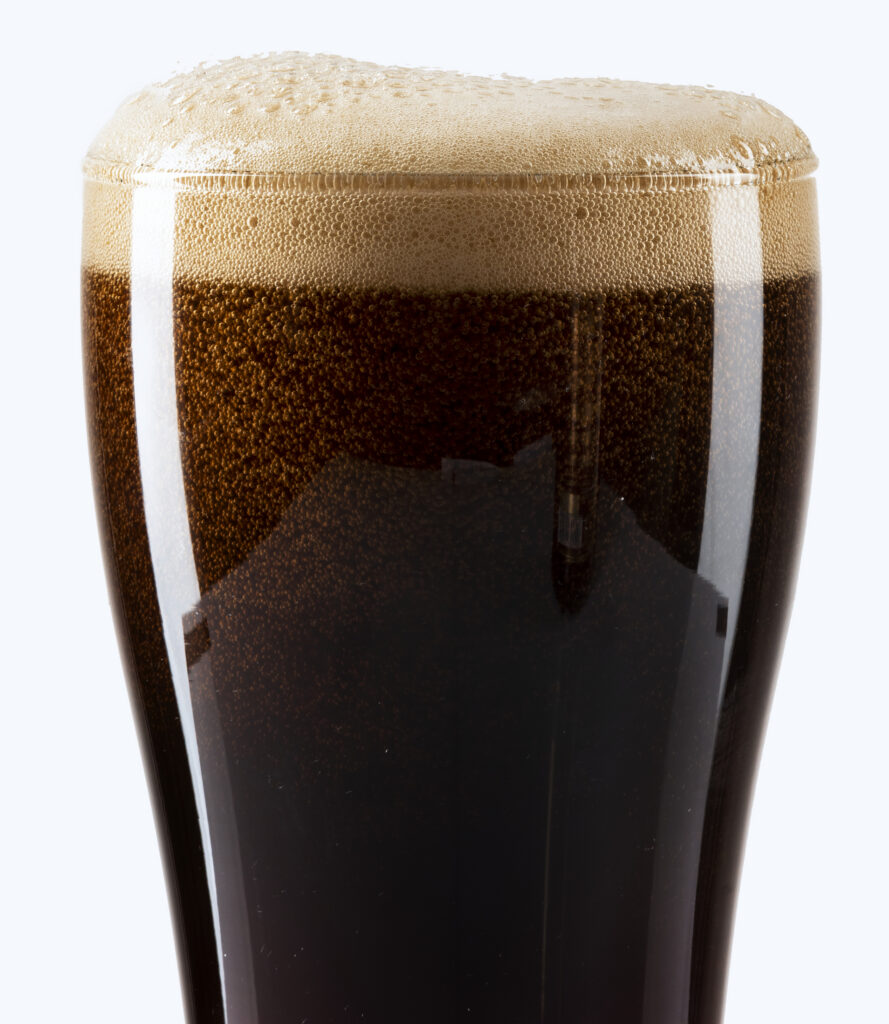
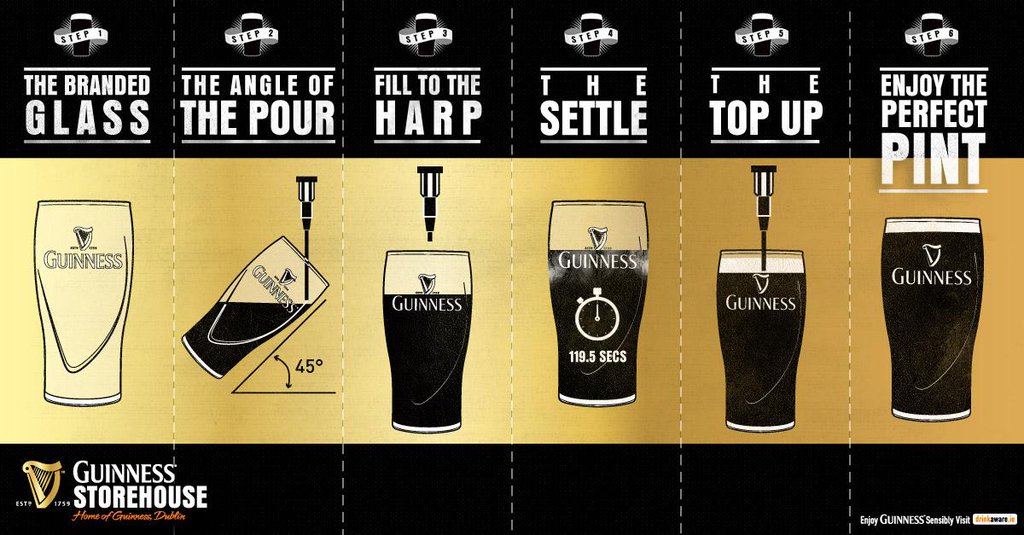
A well-kept Guinness should arrive with care, not slammed down in ten seconds. It should look right, settle properly, and taste fresh. If the pint is warm, flat, or poured without attention, I would be cautious about the rest of the operation. The same logic extends to draft lines generally. Beer should taste clean. Glassware should be clean. Bartenders should know what they are serving without fumbling through every basic question.
This is not snobbery. It is an efficiency test. A pub that gets the fundamentals right usually gets many other things right too: pacing, staffing, storage, and respect for the customer.
Visitors who do not drink beer can use the same principle with cocktails or whiskey. Ask for something simple and classic. If an Irish coffee, hot whiskey, or neat pour arrives handled with confidence, that is reassuring. If every order feels improvised, the pub may be leaning too heavily on atmosphere alone.
Food can rescue or ruin the night
Many visitors want a pub that can function as dinner, not just a drinks stop. That is where expectations should be calibrated. A pub menu does not need to be ambitious to be good. It needs to be dependable, hot, and proportionate to the room.
The strongest Irish pub kitchens in New York usually do a few things well: brown bread or soda bread if they make it, hearty mains like shepherd’s pie or fish and chips, and familiar comfort dishes that can feed a table of mixed appetites. A pub that understands how to pace food with drink service is especially valuable for groups. Nothing drains energy from a night faster than one person eating while three others wait twenty-five more minutes.
I would pay attention to whether the menu matches the pub’s identity. If the place presents itself as traditional but the menu reads like a generic sports bar with one token Irish stew, that disconnect tells you something. On the other hand, a concise menu with a few house specialties often signals more discipline than a sprawling one trying to be everything.
Families and older visitors usually benefit from pubs where the kitchen is taken seriously. Younger groups may care less, but even they notice the difference between decent food and freezer-to-fryer indifference by the second round.
Noise level is not a small detail
People often underestimate how much noise shapes their memory of a place. A pub can have strong drinks, decent food, and a prime address, then still disappoint because conversation never becomes easy.
If visitors are meeting old friends, introducing relatives, or trying to talk after a conference day, noise level should be one of the first filters. Live music is wonderful in the right setting, but it is not always what people think it will be. Traditional sessions can create exactly the mood a visitor hopes for. They can also turn a quiet catch-up into a shout across the table if the room is tight and the acoustics are harsh.
Sports are another factor. During a big match, a pleasant pub can become a wall of sound. For some visitors, that is the point. For others, it can feel chaotic. There is nothing wrong with either preference, but it helps to know in advance.
If you are choosing for someone else, especially out-of-towners, do not just ask whether the pub has music or televisions. Ask when, how loud, and what kind of crowd that tends to draw. A room at 5:30 p.m. Can be unrecognizable by 8:30.
Service is where hospitality becomes real
The most memorable Irish pubs in New York tend to share one trait that has nothing to do with decor. They know how to make people feel at ease without smothering them.
Good pub service has a certain rhythm. Guests are greeted promptly. Orders are taken cleanly. Recommendations are given without a sales pitch. The bartender notices an empty glass. The server understands whether the table wants another round, the check, or a few more minutes. This sounds basic, but it is surprisingly rare in heavily trafficked parts of the city.
Visitors notice hospitality in very practical ways. Did someone help them find a seat? Were they rushed after one drink during a slow period? Was the staff patient with an older guest who needed a quieter corner? Did the pub make room for a solo traveler at the bar without making them feel stranded?
A place can be crowded and still feel generous. It can also be half-empty and somehow cold. If you are reading reviews, look for comments that mention staff by behavior rather than by emotion. “Handled our large group efficiently” means more than “great vibes.” “The bartender suggested a whiskey flight based on our budget” is more useful than “amazing service.” Details reveal patterns.
Reviews help, but only if you read them like a local
Online reviews are full of noise. Tourists reward convenience. Regulars reward consistency. Influencers reward appearance. None of those are useless, but they describe different things.
Star ratings matter less than the shape of the feedback. A pub with a mix of strong praise and a few complaints about crowds may still be excellent if it is busy for a reason. A pub with lots of generic five-star comments and no specific details may have mastered promotion more than hospitality. I trust reviews that mention timing, table management, pour quality, and what the room felt like on a particular kind of night.
Photos can be revealing too, though not always in the way owners intend. Look at crowd composition, spacing between tables, and whether the room still looks welcoming when it is full. If every photo is either empty in perfect lighting or jammed wall to wall on a holiday, you are missing the middle, which is what most visitors actually need.
It also helps to cross-check a place against its surrounding block. Some pubs benefit from spillover traffic from transit hubs or theaters, which can make them look more desirable online than they feel in person. Others sit on quieter streets and build a steadier local following. Context matters.
Timing can make the same pub feel like two different businesses
A useful trick when choosing for visitors is to think less about the pub itself and more about the time slot.
An after-work pub in midtown can be energetic, polished, and efficient between 5 and 7 p.m., then strained by 8 if every nearby office decides to do one more round. A neighborhood pub on a Saturday afternoon may be ideal for lunch and long conversation, but far less appealing late at night when the music starts and the room turns younger. A place known for weekend sessions may be surprisingly calm and excellent on a Tuesday.
This is one reason locals often give recommendations that fail visitors. They remember their best version of the place. The visitor arrives at a completely different hour, on a different day, with a different crowd, and gets a different experience.
When possible, match the pub to the schedule. If someone wants to talk, early evening is often the sweet spot. If they want atmosphere and motion, later may be better. If they care about food quality and service, avoiding the single busiest rush can improve almost everything.
A short checklist before you book or walk in
If you need to decide quickly, these five questions will usually steer you in the right direction:
- Is the pub convenient enough that getting there will not become part of the problem?
- Does the room look built for the kind of night the visitor wants, quiet, lively, musical, or meal-focused?
- Are drinks, especially draft beer, handled with visible care?
- Does the menu seem intentional rather than generic?
- Do recent reviews mention service and atmosphere in specific, believable detail?
If the answer is yes to most of those, you are probably choosing well.
Special cases people often forget
Some visitors need a pub that works for a large group. That usually means resisting the instinct to pick the smallest, “most authentic” spot. Character is great, but not when eight people are wedged around a tiny round table near the door. Bigger groups need space, competent reservation handling, and a kitchen that can push food steadily. In those situations, a slightly more commercial pub may deliver a better night than a tiny gem that works beautifully for two.
Solo travelers are another case. A strong Irish pub can be one of the best places in New York to spend an hour alone, especially at the bar. But not every room is friendly to solo guests. Some pubs are so table-driven or group-heavy that a person on their own feels in the way. A good bar rail, attentive bartenders, and a crowd that includes regulars usually solve this.
Then there are visitors chasing “authenticity” in the abstract. I understand the instinct, but authenticity is slippery in New York. A pub can be genuinely Irish-owned, deeply rooted in the immigrant experience, and still adapted to local business realities. Another can be owned by someone with no Irish background at all and still offer a room with more grace, continuity, and hospitality than a dozen louder competitors. Visitors usually respond to integrity more than pedigree.
Holiday periods deserve caution too. Around St. Patrick’s Day, even excellent pubs can become difficult to judge. Crowds swell, menus simplify, service stretches, and the whole city leans performative. If you want to know whether a pub is truly good, go in October or February, not on the one weekend every place is dressed for battle.
When to trust instinct
There is a point where too much research becomes its own trap. Once the basics check out, trust some simple signals when you arrive.
If people at the bar seem comfortable rather than posed, that is promising. If the staff make eye contact even while busy, that matters. If the room sounds lively but not abrasive, if the pints look cared for, if the menu feels coherent, if the place has a little wear without neglect, those are all better indicators than whether the pub appears on every “best of” list online.
The right Irish Pub NYC visitors will enjoy is rarely the one trying hardest to announce itself. It is the one that lets people settle in. The city outside is already fast, loud, and crowded. A good pub gives that energy shape. It turns a random evening into a story someone tells later, usually in small details: the barman who recommended the right whiskey, the booth that opened up at just the right time, the https://johnnyzgkn275.talesignal.com/posts/irish-pub-nyc-recommendations-for-a-memorable-night music that started after dinner, the pint that tasted exactly as it should.
Choose for the night in front of you, not for a fantasy version of New York. That is how you find the place visitors remember.
Hibernia Bar
401 W 50th St
New York, NY 10019, United States
Phone: +1 212-969-9703
FAQ About Irish Pub NYC
What is the best Irish pub in NYC?
The best choice depends on your location and preferred atmosphere. Hibernia Bar is a neighborhood Irish pub in Hell's Kitchen offering Guinness, Irish whiskey, pub food, and sports viewing.
Where do Irish people go in NYC?
New York's Irish community gathers in many neighborhoods and venues. Hibernia Bar welcomes Irish expats, local residents, and visitors at 401 W 50th St, just off Ninth Avenue.
Where can I watch GAA games in New York?
Hibernia Bar lists GAA among the sports it shows. Call +1 212-969-9703 to confirm coverage and opening times for a particular match before visiting.
What is the difference between a bar and a sports bar?
A sports bar emphasizes televised games and a shared viewing atmosphere. Hibernia combines sports viewing with the food, drinks, and hospitality of a neighborhood Irish pub.